

How to Build a Perfect Tabletop RPG Adventure: A Practical Guide for Dungeon Masters
What is the secret to building a perfect D&D adventure that engages your players from beginning to end?
If you have ever spent hours staring at a blank page trying to create the ideal session, know that you are not alone. The key is not in writing a Word document of hundreds of pages, but rather in mastering an efficient narrative structure that mixes mystery, exploration and meaningful combats (not necessarily in that order hehe). In this complete guide, we will break down the step by step of creating unforgettable campaigns using storytelling and persuasion techniques, and we will also provide a free adventure for you to use as a base.
The Anatomy of an Engaging and Immersive Adventure
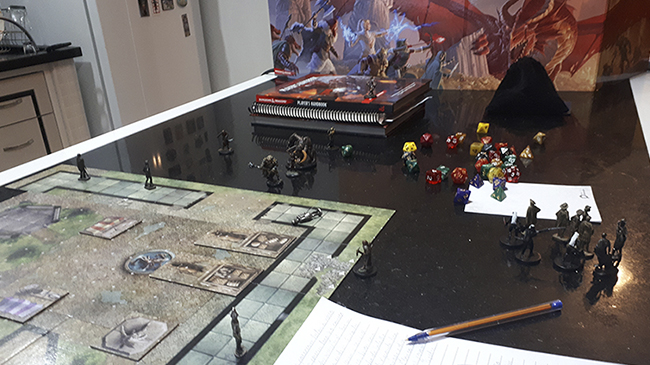
Every great tabletop RPG story needs a solid foundation. The biggest mistake that beginner masters make is focusing too much on monster statistics and forgetting about the narrative flow (fun, immersion). A well-structured adventure works like a funnel: it starts with a broad hook that draws the group’s attention, narrows down into a focused investigation and culminates in a rewarding climax (gold, items, xpêêê).
Think of an adventure as a movie. Nobody wants to watch a movie where the characters just wander randomly. There is a beginning, a middle and an end. There is growing tension, moments of comic relief, unexpected twists and a satisfying climax. Your RPG game should work exactly like that. Even though, depending on your idea, it may change a bit the line of reasoning of the adventure, having a climax right at the beginning, for example. But that is something to explore later, with more experience in your creations!
To exemplify this process, we will analyze the structure of our official adventure "Omens - The Comet", developed by the Erderon team. It was designed specifically for characters up to level 3 and serves as the perfect example of how to balance all pillars of tabletop RPG. If you are new to the concept of campaign structuring, we recommend that you read this article "The 5 Pillars of Tabletop RPG"* in parallel with the free adventure.
We are already writing the next blog and as soon as it is finished we will update here with the link, please wait!!!
The Narrative Hook and the Initial Setting
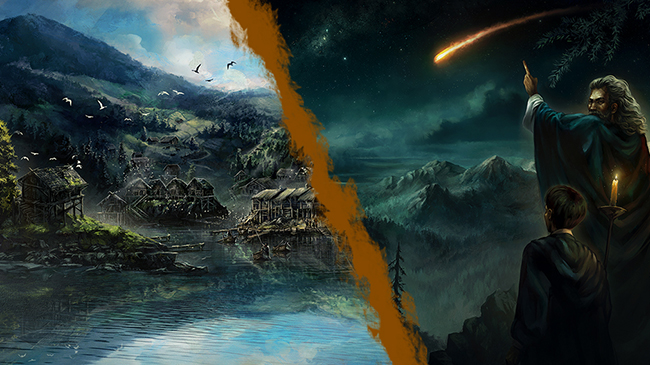
The first step to build your adventure is to establish the tone right in the first minutes of the game, this will be a mix of who you are to them and what you want them to receive from you, from your narration. Your players need to feel the world around them. Instead of simply saying "you arrive at a village", describe the smells, the weather and the oppressive or welcoming atmosphere of the place. The setting is what differentiates a memorable game from a game that will soon be forgotten. When you invest time in creating a tangible atmosphere, your players are not just hearing a story, they are living an experience. They can close their eyes and imagine the rain falling, hear the noise of taverns, feel the tension in the air.
Pay close attention to this: RPG is immersive imagination, the more description you give, the more your players will be able to experience in their heads the place where they are, the food they will eat, and feel the tension and horror of the monster they will face.
And remember something very important here: Not everyone has a good imagination, so the more you work a descriptive narrative, the easier it will be for all players to "live" that experience.
In "Omens - The Comet", the adventure begins in the melancholic village of Barrowton. The narrative does not just throw the characters onto the map; it describes the light rain, the mud on the boots and the tension in the air caused by the passage of a mysterious comet in the skies. This type of sensory introduction makes the players care about the environment before even rolling the first initiative die.
When you are building your own adventure, ask yourself these questions: What is the weather like? What time of day is it? Are there specific sounds? Are there smells? Are there crowds or is it empty? What is the dominant emotion you want your players to feel? Answering these questions will transform a generic description into a vivid scene.
Building NPCs with Purpose and Depth
Non-Player Characters (NPCs) should not be just quest distribution totems. They need hidden motivations, fears and distinct personalities. When creating your D&D adventure, give each important NPC a verbal tic, a secret or an objective that may conflict with the group’s interests.
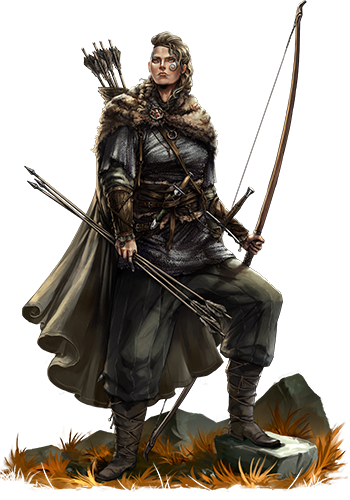 A well-built NPC is one that the group still remembers years later. They talk about "that amazing character the master created". This does not happen by chance. It happens because the master invested time in making that NPC real, with motivations and internal conflicts.
An excellent practical example is the NPC Quirem Moytt, which we introduced in our campaign. He is not just a generic informant; he has his own agenda related to the celestial events that affect the region. When you insert layers of complexity into your NPCs, social interactions stop being an obstacle until the next combat and become a fundamental part of the mystery.
Here is a simple framework to create memorable NPCs:
Name and Appearance: Create something unique and easy to remember. Do not use generic names.
Profession and Context: Why is this NPC where they are? What is their job?
Striking Personality Trait: An accent, a tic, a phrase they repeat, a mannerism.
Personal Objective: What does this NPC want? It is not just helping the group, they have their own goals.
Secret or Conflict: What is this NPC hiding? What is their internal conflict?
Connection to the Plot: How does this NPC connect to the central mystery of the adventure?
When you answer these six questions for each important NPC, you create characters that feel real. Your players will want to talk to them, discover their secrets and even care about their fate.
The Power of Creator Notes
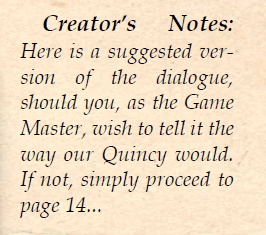
An advanced structuring technique that we use in Erderon is the "Creator Notes" system. When writing your adventure, create side text boxes exclusive for the master. They should contain dialogue suggestions, brief contextualizations of the world’s lore and explanations about the hidden motivations behind each scene.
This is vital because, during the heat of the session, it is easy to forget small details of the story. Having these narrative compasses separate from the main text allows you to conduct the game with much more confidence, adapting the reactions of the world to the (often chaotic) choices of your players.
Creator Notes serve multiple purposes. They can include dialogue suggestions that you can use if you go blank during the session. They can include quick contextualizations about the world’s lore, helping you maintain consistency. They can include explanations about why an NPC acts in a certain way, or what the future consequences of a player’s action are.
When you are writing your adventure, whenever you have an idea that is important for the master to know but is not part of the main narrative, put it in a Creator Note. This keeps the main text fluid and readable, while providing the tools you need to run the session with confidence.
The Importance of the Summary for the Master
You know that moment of panic when the players decide to go left when you planned everything to the right? This is where the "Mission Summary" comes in. Every perfect D&D adventure must contain a page dedicated exclusively to summarizing the main turning points of the story in chronological order.
This summary should not be a summary for the players. It is a summary for you, the master. It should be so concise that you can read it in 2–3 minutes and have a complete understanding of the adventure. It should list the main NPCs, the important locations, the main combats and the narrative turning points.
In our materials, we always include a quick onboarding guide and a tactical summary. This ensures that masters with little preparation time can run the session almost immediately, just by glancing at the main topics and instantly remembering the next step of the narrative, regardless of the alternative routes the group takes.
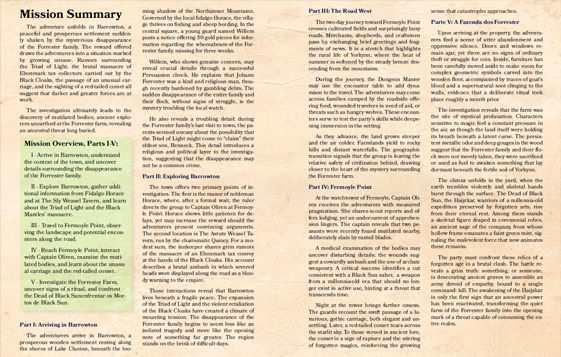
Here is what should be in a good summary:
Initial Hook: How does the adventure begin?
Main Acts: What are the 3–5 main acts?
Main NPCs: Who are the most important characters?
Key Locations: What are the locations the players will visit?
Main Combats: What are the most important combats?
Climax: How does the adventure end?
Consequences: What happens next?
When you have this documented clearly, you can improvise with confidence. You know where the story should go, so even if your players take an unexpected route, you can guide them back or adapt the adventure to incorporate their choices.
How to Improvise in Tabletop RPG Without Losing the Narrative (We are already writing the next blog and as soon as it is finished we will update here with the link, please wait!!!)
Meaningful Combats and Flexible Encounters
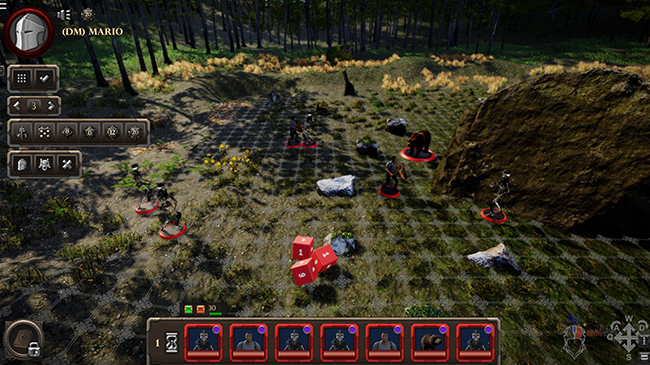
Combats should not happen just to drain player resources. Every hostile encounter needs to advance the story or reveal something about the world. A combat against random monsters is forgettable. A combat that reveals an important secret, that forces players to make a difficult moral decision, or that has lasting consequences in the narrative is memorable.
In "Omens - The Comet", we structured the main combats, such as the confrontation at Fermoyle Point, but we also left room for random encounters that can be adapted to the region’s climate and the group’s level. This offers flexibility without sacrificing narrative cohesion.
Use the official D&D 5e Monster Manual as a base, but do not be afraid to reskin (change the appearance) of creatures so they fit perfectly into the theme of your adventure. A generic goblin is forgettable, but a minion corrupted by the energy of a falling comet becomes a memorable opponent.
When structuring your combats, ask yourself these questions:
Why is this combat happening? What is the narrative context?
What can the players learn from this combat?
What are the consequences if the players win?
What are the consequences if the players lose?
Is there a non-lethal way to resolve this conflict?
How does this combat affect the rest of the adventure?
Structuring Multiple Acts and Narrative Progression
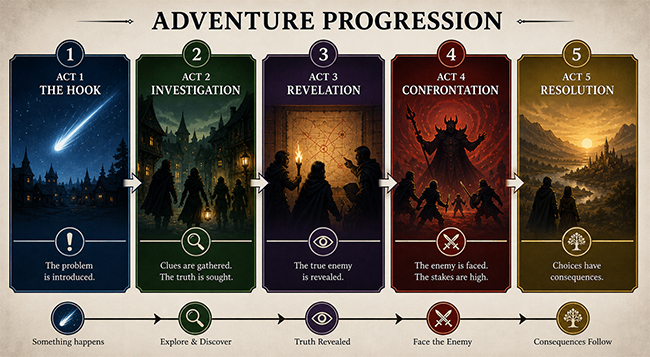
A well-structured adventure follows a clear progression. It is not just a series of random events; it is a narrative that unfolds logically. Most adventures work well with 3–5 acts.
Act 1 (Hook): The players are introduced to the problem. Why should they care?
Act 2 (Investigation): The players explore the world, collect information and discover clues.
Act 3 (Revelation): The players discover the true problem behind the mystery.
Act 4 (Confrontation): The players face the antagonist or the central problem.
Act 5 (Resolution): The consequences of their actions are revealed.
In "Omens - The Comet", you will see exactly how this progression works. The adventure begins with the comet hook, leads players to explore Barrowton, reveals the mystery behind the strange events, culminates in a meaningful confrontation and ends with consequences that affect the larger world of Erderon.
Creating Mystery and Revelation
The best type of adventure is one that keeps players curious. They want to discover what is happening. They want to solve the mystery. For that, you need to structure clues strategically.
Do not place all clues in a single NPC or location. Distribute them. Let players discover clues in different locations, from different NPCs, in different contexts. This makes the investigation feel organic and rewarding.
It is also important to have clues at different levels of obviousness. Some clues should be obvious so even less attentive players notice them. Others should be subtle, rewarding attentive players. Some should only be discovered if players take a specific action.
How to Structure Mysteries in a Tabletop RPG (We are already writing the next blog and as soon as it is finished we will update here with the link, please wait!!!)
Download Your Free Adventure
Now that you understand the theory behind creating a perfect tabletop RPG adventure, it is time to see it in practice. We structured all this knowledge into a complete material, ready to be played in your next session.
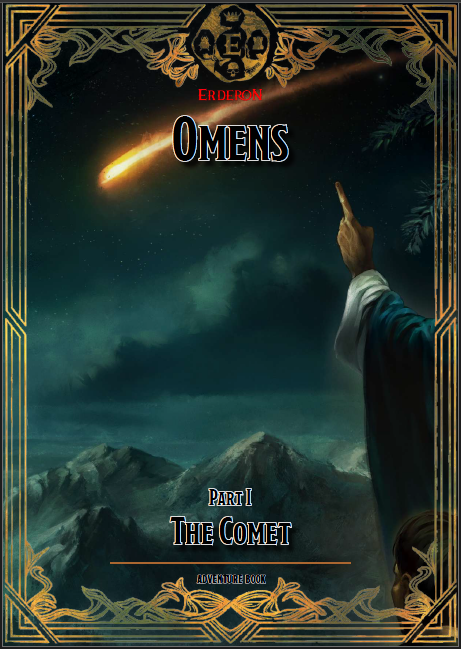
You can download the adventure "Omens - The Comet" for free and see exactly how we applied each of these concepts. It includes detailed descriptions, customized monster sheets and a ready-to-use map and all the Creator Notes you need to run the session with confidence.
Click on the image to download the adventure for free, now!
Elevating Your Immersion with Erderon
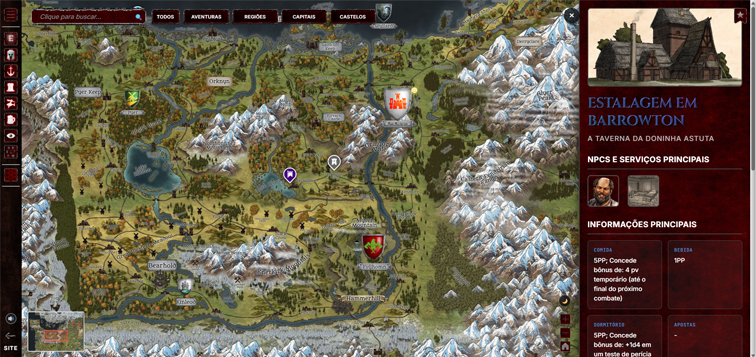
And if you want to take the immersion of your tables to the next level, get to know Erderon. We are the new generation of Virtual Tabletop (VTT), focused on giving back to the Master the role of Story Director. Instead of spending hours setting up macros and dynamic lighting, you can focus on what really matters: the narrative.
Erderon was developed specifically for masters who want to create adventures like "Omens - The Comet" without technical bureaucracy. With our platform, you have access to interactive maps, integrated soundtracks, pre-configured visual effects and combat tools that do not break immersion.
Join Our Community
You are not alone on this journey. Our Discord community is made up of masters of all levels, from beginners to veterans with decades of experience. We share tips, solve problems together and celebrate the incredible stories we create.
Next Steps
Now that you have the knowledge and the adventure, it is time to act. Here is your action plan:
Read "Omens - The Comet" completely
Identify the elements you want to adapt to your own campaign
Create your own mission summary
Prepare your Creator Notes
Invite your players to the session
Play with confidence
Remember: the perfect D&D adventure is not the one you planned perfectly. It is the one your players will remember forever. Sometimes, the best moments come from improvisation, unexpected player choices and moments of pure shared creativity.


